
Visitors wishing to reach the official site should visit schiphol.nl
Amsterdam Schiphol Airport Terminal
Navigating Schiphol's single terminal requires a mix of foresight and strategy. While its "one-building" design makes connections easier, distances can be deceptive, and passenger flows in 2026 present specific challenges at border controls. This guide will help you move through its three levels like an expert, taking advantage of public services and avoiding the most common bottlenecks.
FAQs - Frequently Asked Questions about the Schiphol Terminal
- How many levels does Schiphol have? Three: the ground floor for arrivals and transport, the second level for boarding and check-in, and a third floor dedicated to dining and VIP lounges.
- Is it easy to find your way? Yes, the signage is excellent, but you should prepare for walks of up to 20-25 minutes between the ends of the terminal.
- Are there accessible services without passing security? Yes, in Schiphol Plaza (public area), you have an Albert Heijn supermarket, pharmacies, luggage storage, and direct access to the underground train station.
- How crowded is the airport? Overcrowding is chronic at "All Passports" border controls. I recommend booking a Security Slot online to speed up your transit through security.
Image
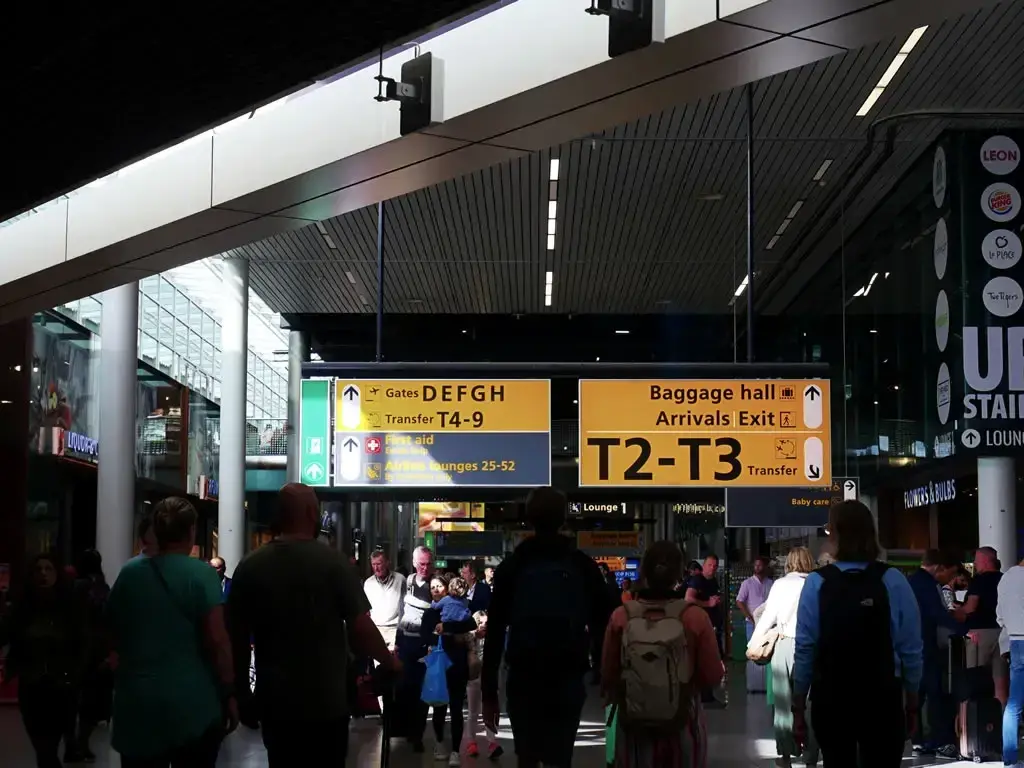
Photo by Suzi Kim - Unsplash
Critical Points: Intelligent Traveler's Manual
1. The Challenge of Distances and Piers
User Experience: Schiphol is massive. Travelers often underestimate the time needed to reach distant gates like D84 or the low-cost piers (H/M), where services like bathrooms and seating are also much more limited and warmer.
Strategy: Don't linger too long in the central squares (Lounge 1 or 2). If your gate is at piers G, H, or M, head there as soon as your flight appears on the screen, as the intermediate passport control can delay you for over an hour.
2. Hygiene and Maintenance Alert
User Experience: Frequent sightings of mice have been reported in the boarding areas of the D gates and in several food outlets in Schiphol Plaza. Additionally, some bathrooms on lower levels present cleanliness and maintenance issues.
Strategy: Keep your belongings and food sealed if you are going to wait a long time at the D gates. Prioritize using bathrooms on the upper levels (Lounge area), which are usually in better condition than those on the ground floor.
3. Transport and Ground Connection Logistics
User Experience: The Uber pickup point has been relocated and requires a long and somewhat confusing walk from arrivals. On the other hand, official taxis may try to apply excessive rates if a price is not agreed upon or if you don't use the regulated stand.
Strategy: If you are going to the city center, use the train (pay directly with your mobile at the turnstiles). If you prefer Uber, follow the signs to "Uber Pickup" with patience. Avoid Travelex ATMs in the Plaza due to their high commissions; look for traditional banks once you reach the city.
4. Luggage Management and Strollers
User Experience: It is common for strollers not to be delivered at the aircraft door but rather at the baggage belt, forcing you to carry your child through the entire migration and hallway route.
Strategy: Carry an ergonomic baby carrier in your hand luggage. If your suitcase takes more than 45 minutes (common at Schiphol), always check the screens, as they change the assigned belt number without an audible warning.
Terminal Overview
Schiphol operates as a single terminal divided into three main levels. This design allows you to connect flights without changing buildings, although it can involve long walks between gates. Signage is clear, in English and Dutch, and the airport offers good internal connectivity, although during high-demand hours, critical bottlenecks can form at security and passport controls, especially for non-EU citizens.
Ground Floor: Arrivals and Transport
This area concentrates arrivals processes, including baggage belts, customs controls, and exits to ground transport options. From here you can directly access the P1 parking lot, hotel shuttles, buses, and taxis. Also located here is Schiphol Plaza, a vibrant public area with shops, restaurants, an Albert Heijn supermarket (ideal for buying water at normal prices), a hairdresser, lockers, and the main access to the underground train station.
Services are well distributed, although the area can be congested during peak times. User Experience: Note that free water fountains have almost completely disappeared from this zone, making the supermarket in the Plaza your best option for hydrating before traveling.
Second Level: Check-in and Boarding Gates
This level is the operational heart of Schiphol and is divided into east and west zones to organize your flow:
- East Zone: Check-in 1-16, gates B, C, D (lower and upper levels), and E. Generally, these gates serve your flights within the Schengen area and European destinations.
- West Zone: Check-in 17-32, gates F, G, H, and M, which are usually for your intercontinental or non-Schengen flights.
Passenger flow is technologically advanced thanks to 3D scanners (which allow you to leave liquids and laptops in your bag), but crowds are frequent. Strategy: I recommend arriving at least 3 hours in advance for international flights and always using the automated check-in kiosks to avoid manual queues.
Third Level: Dining and VIP Lounges
On this upper level, you will find various dining options, though availability and quality can be limited if you travel outside main business hours. Airline lounges, showers, and strategic rest areas are also located here.
- Lounge 1: Gate areas B and C.
- Lounge 2: Gate areas D and E.
- Lounge 3: Gate areas F, G, and H/M, with separate access via passport control.
User Experience: Lounges like Aspire 41 often have virtual waitlists of up to 2 hours. Conversely, on this level you can find the Rijksmuseum Schiphol and a library, perfect spots for a more cultural and relaxed wait if you don't have lounge access.